Yes! SEO is still worth it in 2026. It drives consistent organic traffic, improves lead quality, builds brand authority, and offers long-term ROI, especially when optimized for user intent, quality content, and AI-friendly search trends.
The digital world is changing fast, and many businesses wonder if SEO is still worth investing in for 2026. In recent times, with the arrival of innovative technologies such as AI-powered searches and voice assistants, users’ habits of locating information are changing. Hence, it is natural to question whether traditional SEO still works. The answer to this question is YES! Data and real examples show that SEO remains valuable for most businesses. If you are curious to know, ‘Is SEO relevant in 2026?’ read this blog. Here, we have explained why SEO remains an important marketing strategy, the benefits it brings, and how businesses can maximize return on investment (ROI) in 2026.
In 2026, businesses can reach their audience through many digital channels, including social media, paid ads, and AI tools. Even so, SEO remains a strong and long-term growth strategy. It helps businesses get the right kind of website visitors, increase brand awareness, guide customers through their buying journey, and boost sales.
Here are the main reasons why SEO is still worth investing in
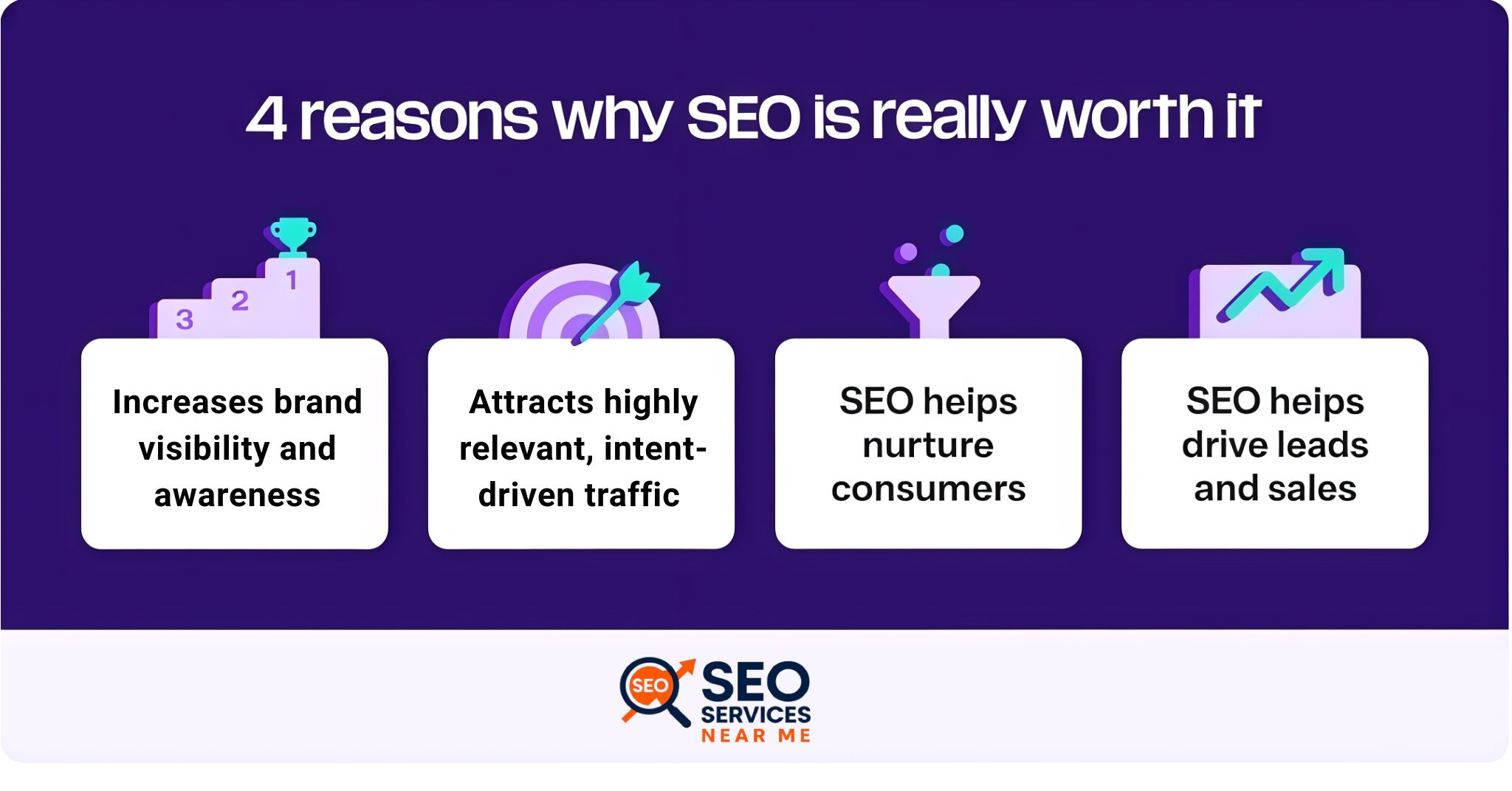
SEO is a powerful way for companies to create awareness about their brand, their products, and their services. By featuring in the search engine result lists at the initial stages of customers, companies create familiarity and build trust with their customers without having to pay for each site visited.
Here is why SEO is important for business
SEO, on the other hand, gives long-term visibility without costing for every click, which makes it a more cost-efficient approach for improving brand awareness.
SEO is highly effective because it can draw people who are searching for specific information or products/services. Moreover, instead of targeting a wide and generic population, it connects a business with people who show a direct interest in it. This will result in enhanced engagement.
SEO attracts qualified traffic by doing the following
The priority on the right audience makes search engine optimization a visitor traffic source that comes from people who are likely to dwell on your site for a considerable amount of time, without necessarily paying for every click that brings them there.
| Factor | SEO (Organic Traffic) | Paid Advertising (PPC) |
| Audience intent | High (users actively searching) | Medium (interrupted exposure) |
| Traffic quality | Highly relevant | Variable |
| Cost per click | No cost per click | Ongoing cost per click |
| Long-term value | Sustained over time | Stops when the budget ends |
| Engagement potential | High | Moderate |
SEO helps businesses guide customers at every step of the process, from the beginning of the inquiry stage to after-sales. Specifically, by offering valuable and relevant content, organizations can induce users passively through the sales funnel and increase conversions.
This is how SEO aids customer engagement
For instance, an individual looking for ‘SEO services near me’ might consider learning more about SEO services, as well as evaluating various agencies available locally for their services. The type of information contained in the articles can aid them in their quest.
SEO facilitates measurable business growth with the help of consistent leads, as well as sales that are generated over time. SEO can be combined with the concept of Conversion Rate Optimization (CRO) to facilitate the generation of revenue with the help of website traffic.
Usually, the results of SEO are achieved through
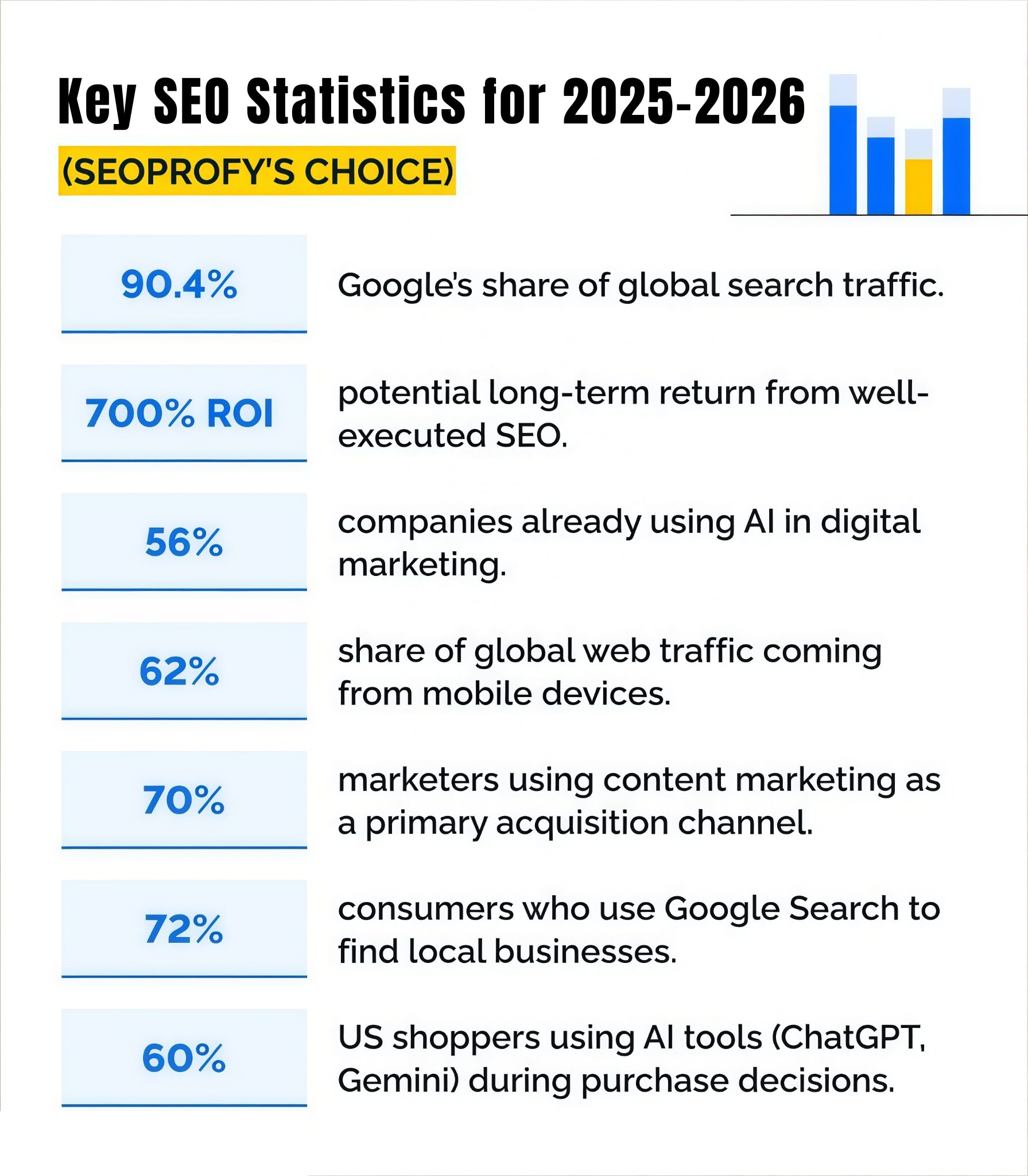
SEO is a dynamic process that is shaped based on the evolving nature of technological advancements and the patterns of human usage. The year 2026 will require a focus on Artificial Intelligence (AI) search, high-quality content, and the overall experience for users.
The following are the main SEO trends to watch:
AI and Generative Search: Your search results and other data should be easily understandable and implementable by AI algorithms.
User Intent and Content Depth: Engage with actual user queries in the best possible manner, with the focus being on quality rather than keyword density.
Mobile First & User Experience: Make sure your site loads quickly, is compatible on any device, and is easily navigable.
SEO is often seen as valuable, but many companies hesitate to invest in it. These are some common reasons why companies question SEO’s worth
First, SEO always entails an investment. Whether an organization hires an SEO agency or starts an in-house team, monthly costs will be involved for salaries, tools, and expertise. Overall, an initial investment in SEO makes organizations pause despite its eventual ROI.
In addition to cost, the time it takes for the results to appear is another concern. Usually, SEO takes 3-6 months, and sometimes longer, to show a clear ROI. However, once it starts working, SEO generates traffic and sales 24/7 compared to online advertisements. They cease to produce any further returns as soon as the budget gets exhausted.
Another reason for hesitation is SEO’s history. Indeed, in the past, some companies used risky tactics that no longer work and could even harm a website today. Due to this fact, business owners can still relate SEO to those outdated methods. That being said, modern SEO focuses on ethical, long-term strategies following search engine guidelines.
Finally, SEO requires multiple skills, including strategy, content creation, and technical development. Many businesses don’t have all these capabilities in-house, which can make SEO feel overwhelming. In such cases, working with a full-service SEO agency can help fill these gaps.
Even though many businesses worry about the cost of SEO and how long it takes to see results, SEO often delivers strong ROI over time. Studies show that a well-run SEO campaign can generate an average return of about 748%. This means every $1 spent can bring back around $7.48. Mainly, because of this, SEO remains one of the most cost-effective strategies for long-term, sustainable business growth.
ROI Comparison across Digital Marketing Channels
| Marketing Channels | Typical ROI | Lonevity of Impact | Cost Dependence |
| SEO | Very High | Long-term | Low (no per-click cost) |
| Paid Search (PPC) | Medium | Short-term | High (per-click-cost) |
| Social Media Advertising | Variable | Short to Medium-term | Medium to High |
| Email Marketing | Medium-High | Medium-term | Low |
SEO is absolutely worth it in 2026 for businesses whose customers rely on search engines. It continues to drive consistent organic traffic, attract higher quality leads, strengthen brand authority, and deliver long-term returns. While search behavior is evolving with AI, SEO remains essential, and businesses that focus on quality content, user intent, and strong technical performance will continue to grow and succeed online. If you are seeking the top SEO agency to meet your business needs, call us immediately. We have an expert team to offer high-quality, AI-powered SEO services that guarantee the best results.
SEO will start giving you results after 3 to 6 months, and you will have a stronger ROI usually between 6 and 12 months, depending on how competitive the market is.
No, AI will only make search better, but it will not replace SEO. In the future, brands will still have to produce optimized content, gain authority, and use structured data to perform well both in traditional searches as well as in AI-driven searches.
Yes! Small businesses can attract the right customers and even compete with big brands if they use local SEO, create quality content, and have properly optimized pages.